Most people don’t wake up one morning and decide to become dependent on alcohol.
Instead, it usually happens gradually.
A drink after work becomes two. Weekends become weekdays. Alcohol slowly moves from being something you enjoy to something you rely on.
If you’ve ever wondered, “Am I drinking too much?” you’re asking an important question. Recognizing the warning signs early can prevent years of unnecessary pain and make recovery much easier.
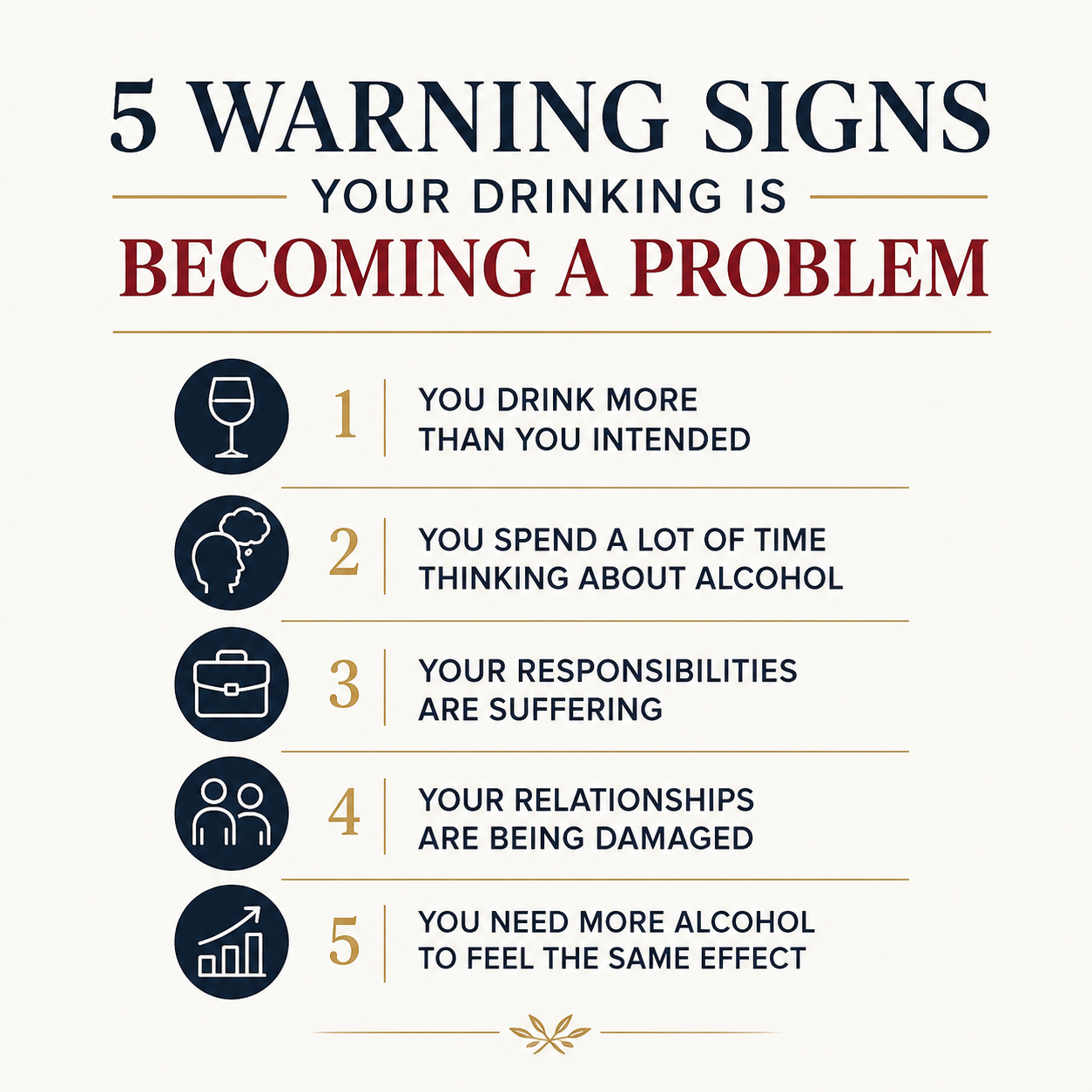
Here are five signs that your drinking may be becoming a problem.
1. You Drink More Than You Intended
Have you ever planned to have just one or two drinks but ended up having several?
This is one of the earliest warning signs of alcohol dependence.
You may tell yourself:
- “Just one more.”
- “I’ll stop after this.”
- “I didn’t mean to drink that much.”
When this becomes a pattern rather than an occasional occurrence, alcohol may be beginning to control your decisions rather than the other way around.
2. You Spend a Lot of Time Thinking About Alcohol
Alcohol doesn’t have to be in your hand to be affecting your life.
Ask yourself:
- Do you think about when you’ll be able to drink?
- Do you plan social events around alcohol?
- Do you look forward to drinking more than the event itself?
When alcohol begins occupying your thoughts throughout the day, it’s becoming more than a casual activity.
3. Your Responsibilities Are Suffering
One of the clearest indicators that drinking has become unhealthy is when it begins affecting daily responsibilities.
You might notice:
- Reduced productivity at work
- Missing important appointments
- Calling in sick
- Neglecting responsibilities at home
- Difficulty staying motivated
Alcohol often promises relaxation but eventually begins stealing your effectiveness.
4. Your Relationships Are Being Damaged
Alcohol rarely affects only the person drinking.
Loved ones often experience the consequences first.
Consider whether:
- Your spouse has expressed concern.
- Friends have commented on your drinking.
- Arguments happen more frequently.
- Trust has been broken.
- You isolate yourself from people who care about you.
Healthy relationships are one of the first casualties of unhealthy drinking.
5. You Need More Alcohol to Feel the Same Effect
Over time, the body develops tolerance.
That means it takes more alcohol to produce the same relaxed or euphoric feeling.
This is one of the classic signs that alcohol is becoming a dependency rather than simply a recreational activity.
Drinking Is Often About More Than Alcohol
Many people believe alcohol is the real problem.
In our experience working with individuals and couples for more than 35 years, alcohol is often a symptom of something deeper.
People frequently drink to cope with:
- Anxiety
- Shame
- Loneliness
- Emotional pain
- Fear
- Stress
- Unresolved trauma
Stopping alcohol is incredibly important.
But lasting freedom usually requires addressing the emotional wounds that were driving the drinking in the first place.
We call this Stage 2 Recovery: Emotional Sobriety.
Stage 1 Recovery is stopping the unhealthy behavior.
Stage 2 Recovery is healing the emotional, psychological, relational, and spiritual issues that remain after the alcohol is gone.
When people focus on both stages, they often experience not only sobriety but a healthier marriage, deeper relationships, greater emotional stability, and a renewed sense of purpose.
A Resource to Help You
If you’d like to better understand the deeper dynamics behind addiction and recovery, we invite you to read our book:
A Roadmap to the Soul
This practical guide explains why unhealthy behaviors develop, how emotional wounds shape our lives, and provides a roadmap toward lasting freedom through Emotional Sobriety.
Whether you’re struggling personally or love someone who is, this resource can help you move beyond simply managing symptoms toward genuine transformation.
There Is Hope
If you recognized yourself in one or more of these warning signs, don’t ignore them.
Alcohol problems rarely improve on their own.
The good news is that recovery is possible.
Thousands of people have discovered that freedom isn’t just about stopping drinking—it’s about becoming emotionally healthy.
That’s the journey toward Emotional Sobriety, and it can change your life.
Frequently Asked Questions
What is considered problem drinking?
Problem drinking occurs when alcohol begins negatively affecting your health, relationships, work, responsibilities, or ability to control how much you drink.
Does drinking every day mean you’re an alcoholic?
Not necessarily. Some people drink daily without meeting the criteria for alcohol dependence, while others binge drink less frequently but experience significant negative consequences. The key issue is the impact alcohol has on your life and your ability to control its use.
What is Emotional Sobriety?
Emotional Sobriety is the process of healing the emotional, psychological, relational, and spiritual issues that often remain after someone stops drinking or using other substances. It focuses on lasting transformation rather than simply eliminating the addictive behavior.
About the Authors
Dean Sunseri, LPC, and HollyKem Sunseri have over 35 years of personal recovery experience and have helped hundreds of individuals and couples find lasting freedom through counseling, coaching, and the Sunseri Roadmap. Their mission is to help people move beyond addiction into Emotional Sobriety—a life marked by healthy relationships, emotional resilience, and genuine inner freedom.